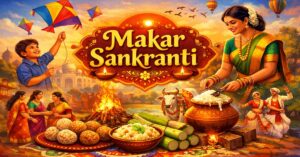
Makar Sankranti is said to be one of the most enthusiastically observed festivals in the country, celebrating the entry of the Sun into the zodiac sign Capricorn, commonly known as Makara. This event takes place every year in mid-January, which marks the end of the winter season, ushering the era of extended days.
Observations of Makar Sankranti in Various Parts of India
Makar Sankranti is observed in numerous colors across the country. In North India, dipping themselves in the Ganges or the River Yamuna, praying to God Sun, is a common practice. Flying kites, which represent independence, is another way of celebrating Makar Sankranti, especially in Gujarat and Rajasthan. The exchange of “tilgul” or “sesame-jaggery sweets” is a practice of Maharashtra, marking Makar Sankranti with wishes of “sweetness” or harmony.
The event is known as “Pongal” in South India, especially in the state of Tamil Nadu. The festival requires the harvesting of rice and then preparing it and dedicating it to the Sun God. The Assamese celebrate “Magh Bihu” by arranging a feast and performing various types of dances. The people of the states of Odisha and West Bengal prepare various dishes made from rice.
In Odisha, Makar Sankranti is celebrated with great devotion and traditional fervor. People prepare special Makara Chaula, a holy offering made of newly harvested rice, banana, coconut, jaggery, chuda, and sesame seeds, and offer it to deities in temples. Holy dips in rivers, community gatherings, and traditional rituals mark the celebration across villages and towns.