President Murmu unveiled the bust of India’s first and only Indian Governor General at Rashtrapati Bhavan, replacing the bust of British architect Edwin Lutyens.
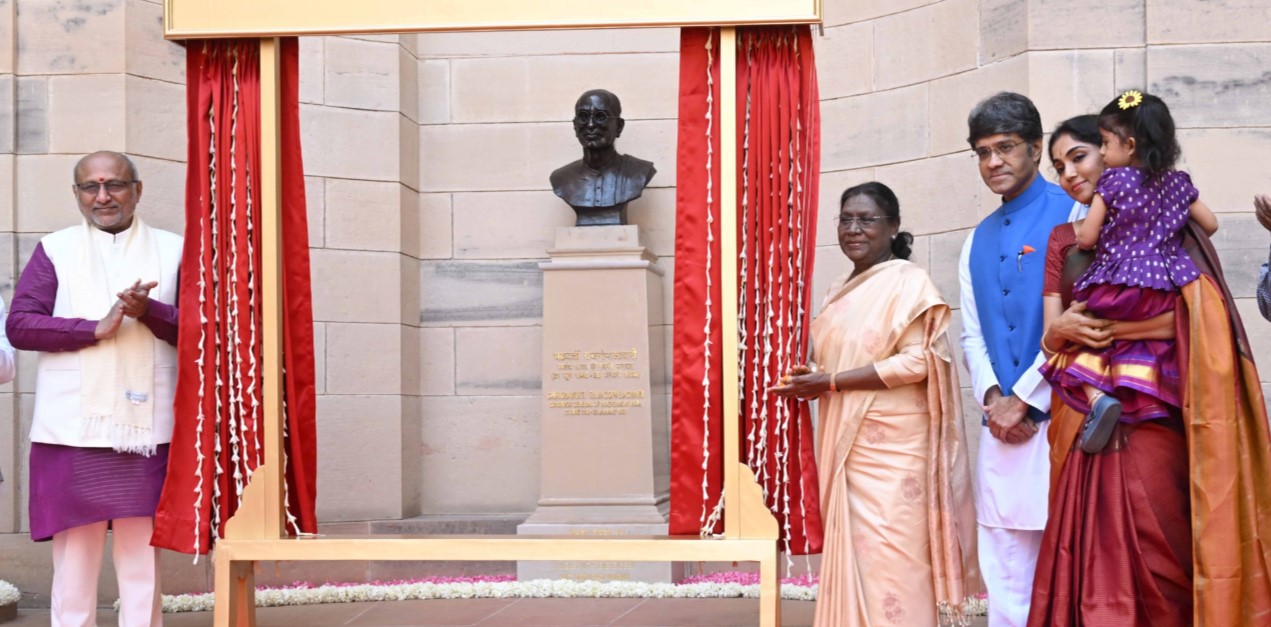
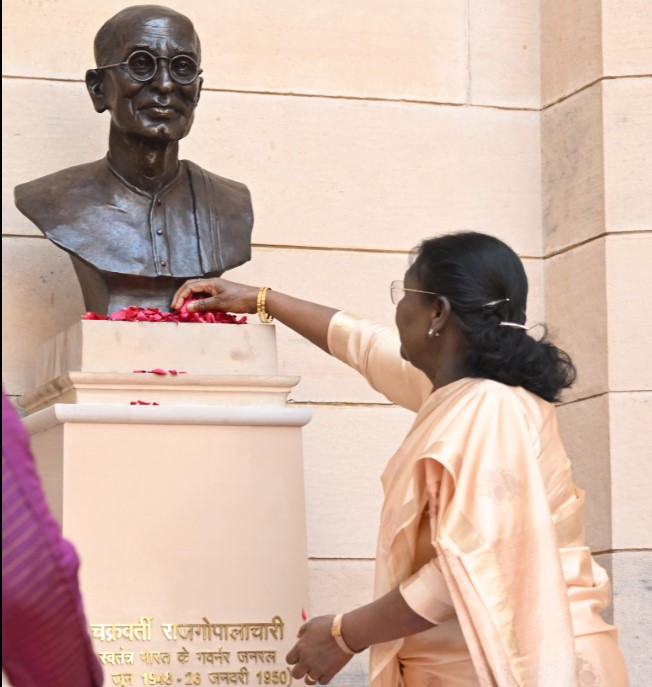
New Delhi: President Droupadi Murmu unveiled the bust of Chakravarti Rajagopalachari at Rashtrapati Bhavan in New Delhi on February 23, 2026.Chakravarti Rajagopalachari was the first and only Indian Governor General of independent India.
The bust stands at the Grand Open Staircase near Ashok Mandap.It replaces the bust of Edwin Lutyens.President Murmu said this step is part of efforts to shed the vestiges of colonial mindset.
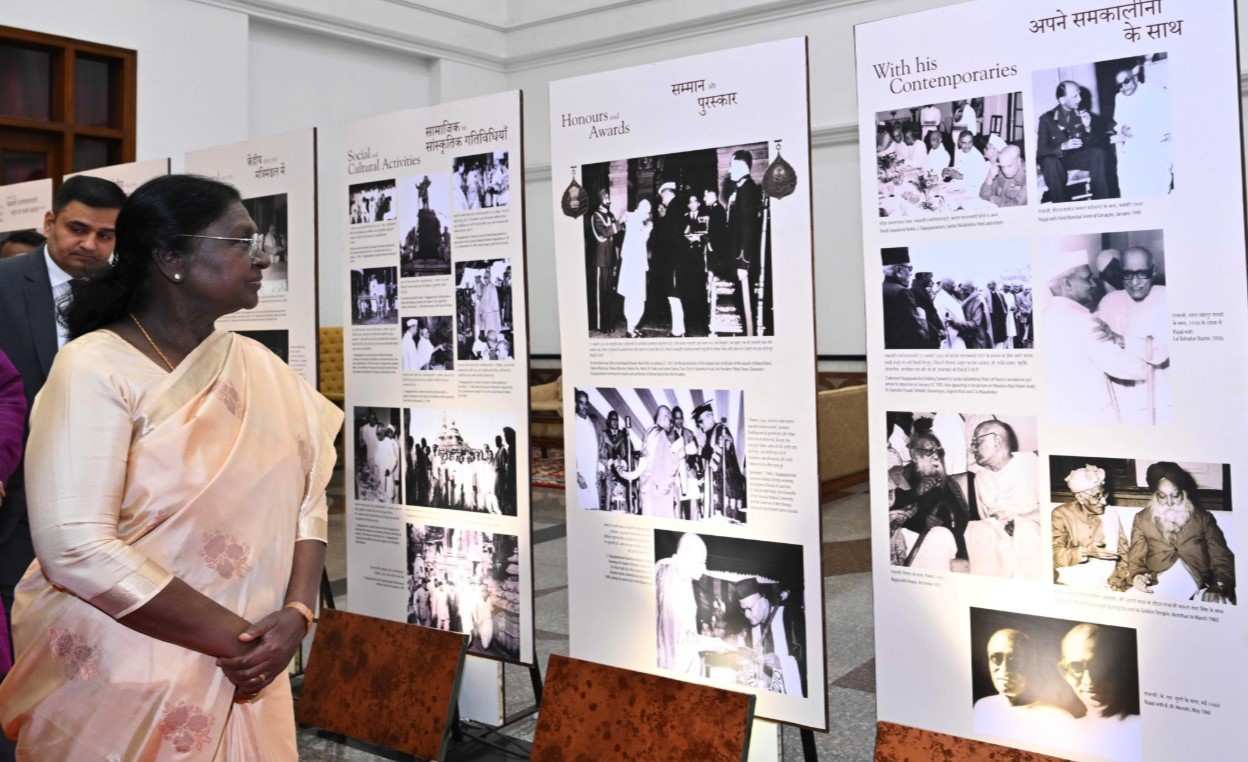
She said it helps embrace India’s culture, heritage, and traditions with pride.It also honours those who served Bharat Mata with extraordinary contributions.This change marks a move to honour Indian leaders in key places at Rashtrapati Bhavan.People can expect more steps to highlight India’s heritage in public spaces.
Chakravarti Rajagopalachari : was an Indian statesman, lawyer, writer, and freedom fighter. He is often called Rajaji or C.R.He was born on December 10, 1878, in Thorapalli village, near Hosur, in what is now Tamil Nadu.Rajagopalachari studied law and started his practice in Salem.He joined the Indian independence movement early. He became a close associate of Mahatma Gandhi.He took part in key protests like the Non-Cooperation Movement and Civil Disobedience Movement.
He faced imprisonment several times.After independence, he held major roles. He served as Governor of West Bengal.From June 1948 to January 1950, he was the last Governor-General of India. He was the only Indian to hold this post. All others before him were British. The office ended when India became a republic in 1950.He also served as Home Minister of India and Chief Minister of Madras state.Later, he founded the Swatantra Party in 1959. It supported free enterprise and opposed some Congress policies.Rajagopalachari wrote books, including retellings of the Ramayana and Mahabharata in English and Tamil.
He received the Bharat Ratna, India’s highest civilian award, in 1954.He opposed nuclear weapons and supported world peace.He died on December 25, 1972, in Madras (now Chennai) at age 94.
Read More: President Droupadi Murmu to Visit Maharashtra, Jharkhand and Rajasthan from February 24 to 27